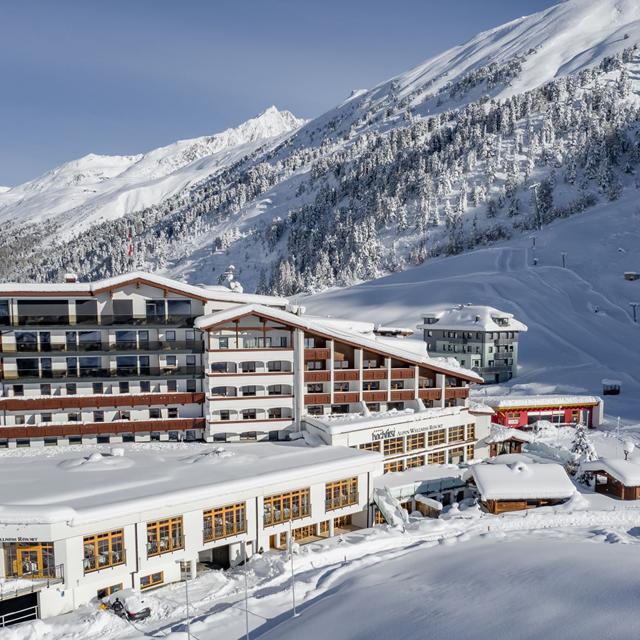
The short answer: The best months are January and February. Snow depths at summit level average 150 to 220 cm, daytime temperatures sit around -4°C to -6°C, and ski weeks start from €650 per person including accommodation and lift pass. Obergurgl sits at 1,930 m and Hochgurgl at 2,150 m, with the highest runs reaching 3,080 m. Flight time from the UK to Innsbruck is approximately 2 hours, followed by a 90-minute transfer to the resort.
Which months offer the best snow conditions?
January and February consistently deliver the deepest, most reliable snow cover in Obergurgl-Hochgurgl. Because the resort sits above 1,900 m, it holds natural snow far longer than lower Austrian resorts, and the season stretches well into late April in most years.
| Month | Avg. Base Depth (cm) | Avg. Daytime Temp (°C) | Lifts Open (%) | Crowd Level |
|---|---|---|---|---|
| Late Nov | 40 to 70 | -6 | 50 | Low |
| December | 80 to 120 | -5 | 75 | Medium-High |
| January | 150 to 200 | -6 | 95 | Low-Medium |
| February | 160 to 220 | -4 | 98 | Medium-High |
| March | 130 to 180 | -1 | 95 | Medium |
| April | 60 to 110 | +3 | 60 | Low |
March is a strong alternative if you want longer daylight hours and milder temperatures without sacrificing much snow. April suits experienced skiers looking for spring conditions and heavily discounted packages.
How do prices vary across the season?
Price varies considerably depending on when you travel. Christmas and New Year week (roughly 20 December to 5 January) commands the highest rates, often 40 to 60% above the January baseline. Half-term in February (mid-February) is the second most expensive period due to UK and Dutch school holidays.
| Period | Approx. Price pp (7 nights, half-board + lift pass) | Notes |
|---|---|---|
| Late November | €620 to €780 | Early-bird deals, fewer lifts open |
| Christmas-New Year | €1,050 to €1,400 | Peak demand, book 9-12 months ahead |
| January (non-peak) | €650 to €900 | Best value for reliable snow |
| February half-term | €920 to €1,150 | Busy slopes, full lift operation |
| March | €700 to €950 | Sunshine, slushy afternoons |
| Easter (if late) | €680 to €850 | Warm days, variable snow |
Booking in January outside of the Austrian school holiday window gives you the best combination of snow quality, operational lifts, and value for money.
What are the skiing conditions like at the top of Hochgurgl?
Hochgurgl's summit terrain at around 3,080 m stays cold and well-groomed through most of the season. The upper mountain receives regular snowfall from Atlantic weather systems that cross the Alps between November and March. Groomed red and black runs dominate above 2,500 m, while the area around the Top Mountain Star restaurant at 3,082 m offers panoramic views on clear days.
Wind can close the upper lifts temporarily in January and February, but this is rare. The resort's 110 km of marked pistes spread across both villages, connected by the Hohe Mut gondola, meaning there is almost always suitable terrain open regardless of wind conditions higher up.
| Feature | Detail |
|---|---|
| Total piste km | 110 km |
| Highest point | 3,080 m (Hochgurgl summit) |
| Village altitude (Obergurgl) | 1,930 m |
| Village altitude (Hochgurgl) | 2,150 m |
| Number of lifts | 25 |
| Season length (typical) | Late November to late April |
| Nearest airport | Innsbruck (INN), approx. 90 min transfer |
For a broader overview of ski destinations across the Alps and beyond, browse the full wintersport section on Nivosola.
Frequently asked questions
When does the ski season start in Obergurgl-Hochgurgl?
The season typically opens in late November, making it one of the earliest resorts in Austria to open, thanks to its high altitude of 1,930 m (Obergurgl) and 2,150 m (Hochgurgl).
Is Obergurgl-Hochgurgl good for beginners?
Yes. The resort has wide, gentle blue runs and a ski school with English-speaking instructors. The best time for beginners is January or early February when slopes are quieter and conditions are stable.
How cold does it get in Obergurgl-Hochgurgl in December?
Average daytime temperatures in December range from -4°C to -8°C at slope level. Wind chill can make it feel significantly colder, so layering is essential.