
Skiing in Sestrière
Sestrière is the highest main village of the Via Lattea in Piedmont, northwest Italy, built on a pass above the Susa valley. It was created in the nineteen thirties by Fiat's Agnelli family as one of Europe's first purpose-built ski resorts, recognisable by its characteristic round tower hotels, and in 2006 it was the alpine heart of the Turin Winter Olympics. In the Via Lattea you ski 746 kilometres of pistes with 146 lifts according to our data, between 1667 and 3109 metres; recent winters brought up to 215 centimetres of snow on top. Sestrière is sporty, high and sunny. We list 7 accommodations here, from 675 euros per person.
Last checked: 2026-10-26 · Sources: Open-Meteo (snow data), OpenStreetMap (lifts and pistes), partner offers refreshed daily.
Accommodations in Sestrière
 Sestrière
Via Lattea, Italië
Residence Nube d'Argento
 Sestrière5.4
Via Lattea, Italië
Villaggio Olimpico
 Sestrière
Via Lattea, Italië
Hotel Olympic
 Sestrière
Via Lattea, Italië
Hotel Biancaneve
 Sestrière7.4
Via Lattea, Italië
Hotel Sud-Ovest
Sestrière8.1Via Lattea, Italië
Hotel Banchetta
 Sestrière
Via Lattea, Italië
Hotel Hermitage
 Sestrière8.1
Via Lattea, Italië
Hotel Gran Roc
Sestrière6.0Via Lattea, Italië
Hotel Villaggio Olimpico
Snow report & 7-day forecast
Loading forecast...
Skiing from Sestrière
Sestrière sits central and high in the Via Lattea, with lifts leaving straight from the village and links to Sauze d'Oulx, Sansicario, Claviere and French Montgenèvre. The network counts 746 kilometres of pistes and 146 lifts in our data, between 1667 and 3109 metres.
The terrain around the village is sporty, with World Cup-grade descents and long red runs. Intermediates and advanced skiers are superbly served; beginners have practice fields right by the village.
Snow reliability at pass height
As the Via Lattea's highest main village, Sestrière is the area's most snow-sure base: the village sits at pass height and the pistes climb to 3109 metres according to our data. Recent winters measured up to 215 centimetres of snow on top.
Snowfall in this region is erratic, with occasionally spectacular dumps from the southeast and drier spells when snowmaking does the work. At Sestrière's altitude, quality usually holds up well.
The village of Sestrière
Sestrière is a purpose-built high-altitude village with its famous round towers as the landmark, complemented by shops, restaurants and bars along the central axis. Quaint and historic it is not; functional and sporty it certainly is.
The 2006 Olympic heritage is tangible in the race pistes and facilities. Evenings are Italian-lively around the bars and restaurants, without tipping into mass apres-ski.
Who is Sestrière for
Sestrière is the choice for sporty skiers who put altitude, snow security and a big linked area first. Intermediates and advanced skiers get the most from the World Cup runs and the connections across the whole Via Lattea.
Families manage well thanks to practice terrain by the village, though the setting is less cosy than an organically grown mountain village. If charm beats function for you, pick Sauze d'Oulx or a smaller village.
Practical: getting there and booking
You reach Sestrière via Turin and the Susa valley or through the Fréjus tunnel from France; the climb to the pass is well maintained. Turin is the nearest airport, within a manageable transfer.
We offer 7 accommodations in Sestrière, from 675 euros per person. Thanks to the altitude the season is long; Italian holiday weeks are the peak, January the quiet bargain.
Sestrière on the map
Webcams · Sestrière
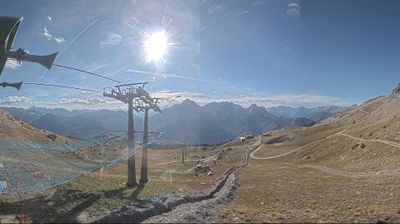
📷 Cesana Torinese › West: Partenza seggiovia Roccia Rotonda - Fort du Chaberton
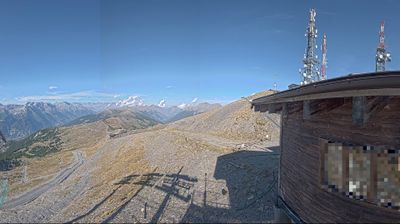
📷 Sestriere: Vialattea - Monte Fraiteve
📷 Sauze d'Oulx › North: Aiguille de Scolette - Mont-Cenis
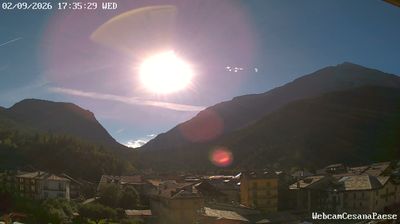
📷 Cesana Torinese › West: Comune Di Cesana Torinese
📷 Oulx › North: Monte Seguret - Susa Valley
📷 Oulx › South: Saint Mary of the Assumption - Monte Fraiteve
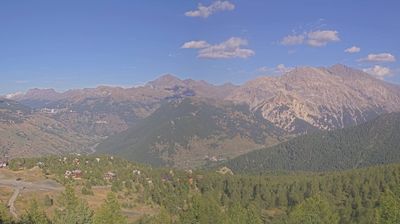
📷 Cesana Torinese: Vialattea - Colle Bercia
📷 Oulx › West: Gad - Via Riccardo Ghiotti
FAQ about Sestrière
How much piste can you ski from Sestrière?
From Sestrière you reach the Via Lattea ski area with around 746 km of marked pistes and 146 lifts.
What does a ski holiday in Sestrière cost?
Accommodations in Sestrière start from around €530 per person; Nivosola compares 9, refreshed daily.
Is there enough snow around Sestrière?
Yes. Recent winters in Via Lattea reached a maximum snow depth of around 215 cm. December to March is the most reliable period.
How high is Sestrière?
Sestrière is the Via Lattea's highest main village, built on a pass, with pistes reaching 3109 metres according to our data. That makes it the most snow-sure base in the area.
Is Sestrière suitable for beginners?
Yes, practice fields sit right by the village and the ski schools are well organised. The area as a whole rewards skiers who already handle red runs though.
What remains of the 2006 Olympics?
Sestrière was the alpine heart of the Turin Games and the race pistes and facilities are still in use, including for World Cup races. Sporty skiers can ski parts of the Olympic terrain themselves.
Which other Via Lattea villages are alternatives?
Sauze d'Oulx is the area's lively nightlife village, while Sansicario and Claviere are quieter and smaller. Everything is connected on skis within the linked area.