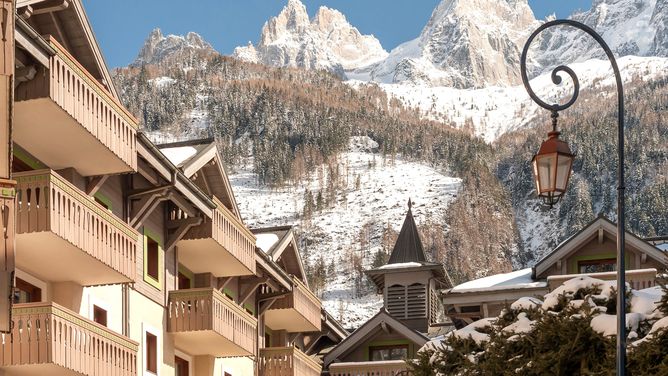
The short answer The Mont Blanc massif is one of the most snow-reliable ski destinations in the Alps. The best months are January through March, with average snowpack depths of 150-250 cm above 2000 m. Daytime slope temperatures range from -6 °C (January) to 0 °C (March). Flights from London to Geneva take roughly 1 hour 45 minutes, followed by a 1.5-hour transfer to Chamonix. Packages start from around EUR 650 per person per week in self-catered accommodation.
How much snow actually falls in the Mont Blanc area each month?
Snow accumulation in the Mont Blanc massif depends heavily on altitude. Chamonix town sits at 1035 m and can see rain during mild spells, but the ski domains of Les Grands Montets (top lift: 3275 m), Le Brévent (2525 m), and La Flégère (2525 m) hold snow reliably from December to April. The table below shows long-term average fresh snowfall and base depth for the upper ski area (around 2000-2500 m):
| Month | Avg fresh snowfall (cm) | Avg snowpack depth (cm) | Avg slope temp (°C) |
|---|---|---|---|
| November | 30 | 40 | -4 |
| December | 60 | 90 | -6 |
| January | 90 | 160 | -8 |
| February | 85 | 200 | -7 |
| March | 70 | 185 | -3 |
| April | 40 | 110 | 1 |
January and February deliver the deepest snowpack and the coldest temperatures, making them the most snow-secure months for a ski trip. March combines a solid base with longer daylight hours (roughly 11 hours) and milder temperatures, which many intermediate skiers prefer.
Which altitude should you target for guaranteed snow cover?
Staying or skiing above 1800 m is the safest bet for consistent natural snow cover throughout the season. The three main ski areas linked under the Mont Blanc Unlimited pass all sit well above this threshold:
- Les Grands Montets tops out at 3275 m; north-facing runs here hold powder for days after a snowfall.
- Le Brévent and La Flégère reach 2525 m and face mostly north and east, preserving snow quality longer than south-facing alternatives.
- Les Houches (top lift 1900 m) is a good buffer option early or late in the season, though lower terrain can thin out in warm April spells.
Resorts at valley level below 1200 m in the same region, such as the lower sections of Megève, are noticeably less reliable before Christmas and after mid-March, with average snowpack depths of only 20-50 cm at base level in December.
When is the best time to book for value and snow?
For the best combination of snow reliability and competitive pricing, target the weeks outside French school holidays in January and early March. French winter school holidays in February push lift-pass demand up sharply and accommodation prices follow.
| Period | Approx price pp/week (self-catered) | Snow reliability | Crowd level |
|---|---|---|---|
| Early January | EUR 650-800 | High | Low |
| French Feb half-term | EUR 1 100-1 400 | Very high | Very high |
| Early March | EUR 720-900 | High | Moderate |
| Late March | EUR 600-750 | Moderate | Low |
A 6-day Mont Blanc Unlimited lift pass costs around EUR 310 per adult (2025-26 indicative rate). Budget separately for ski hire (from EUR 90 per week) and lessons if needed.
Explore more destinations with reliable winter snow conditions on our wintersport overview page.
Frequently asked questions
What is the snowiest month in the Mont Blanc ski area?
January and February are consistently the snowiest months, with upper-mountain resorts such as Chamonix recording average fresh snowfall of 80-110 cm per month above 2000 m.
Is Mont Blanc snow-reliable for a March ski holiday?
Yes. At altitudes above 2000 m the snowpack remains reliable through March, with average base depths of 150-200 cm and daytime temperatures of -2 to 2 °C on the slopes.
How much does a ski holiday to Mont Blanc cost?
Budget from roughly EUR 650 per person per week for a self-catered apartment in Chamonix in January, including a 6-day lift pass. Peak February half-term prices start around EUR 1 100 per person.
