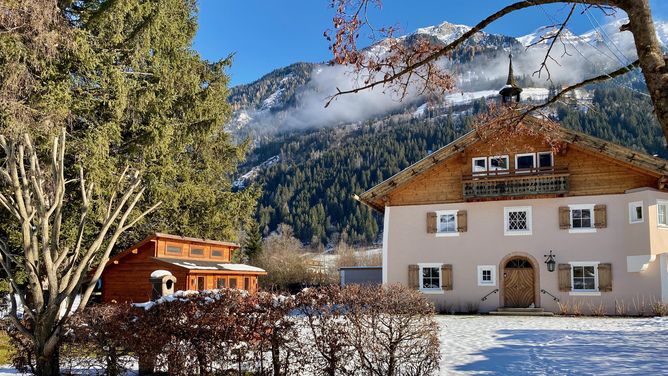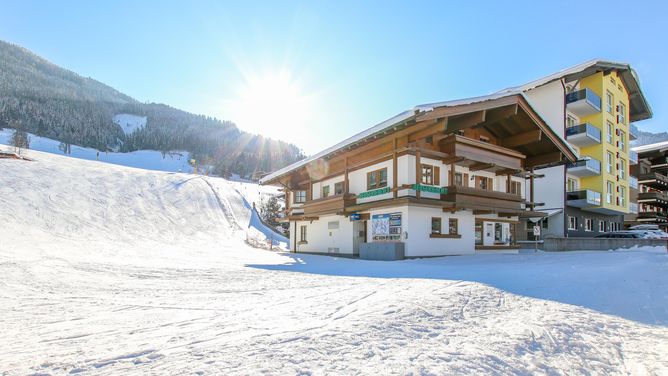
Winter arrived overnight across a broad section of the Austrian Alps. On the morning of 1 November 2026, fresh snow was measured in 13 of 170 tracked ski areas, with Saalbach-Hinterglemm topping the rankings at 4 cm in the last 24 hours. What makes today's update particularly exciting is that several areas are reporting snow accumulation on slopes as low as 1,000 metres above sea level.
In short
- Fresh snow (at least 2 cm/24h) confirmed in 13 of 170 tracked ski areas
- Maximum 24h snowfall: 4 cm at Saalbach-Hinterglemm
- SkiWelt Wilder Kaiser - Brixental has snow down to 1,010 m altitude
- Kitzbüheler Alpen registers 3 cm fresh snow with a base already in place at 2 cm
- Looking ahead: Espace Lumière is forecast to receive the most new snow over the next 7 days with 5 cm expected
Where the most snow fell
The Austrian Alps are the clear winners of this first November snowfall. Saalbach-Hinterglemm recorded the highest 24-hour total with 4 cm, building on a current snow base of 3 cm. Close behind are several major Austrian areas, all logging 3 cm in the past 24 hours.
Ski Amadé, one of the largest ski regions in the Alps, already has a 3 cm base to match its 3 cm of overnight snowfall. The Skicircus Saalbach-Hinterglemm-Leogang-Fieberbrunn and SkiWelt Wilder Kaiser-Brixental both sit at 3 cm fresh and 2 cm base. Further west, Arlberg Skiregion and Oberinntal each received 2 cm with bases of 4 cm, suggesting snow that has been building quietly for a while.
| Ski area | Fresh snow 24h | Snow base |
|---|---|---|
| Saalbach-Hinterglemm | 4 cm | 3 cm |
| Ski Amadé | 3 cm | 3 cm |
| Kitzbüheler Alpen | 3 cm | 2 cm |
| SkiWelt Wilder Kaiser-Brixental | 3 cm | 2 cm |
| Arlberg Skiregion | 2 cm | 4 cm |
| Oberinntal | 2 cm | 4 cm |
| Gerlos-Königsleiten | 2 cm | 2 cm |
Snow at low altitude: valley floors turning white
This is the headline that winter sports fans have been waiting for. Several areas are now showing measurable snow on their lowest accessible slopes, well below the 1,300 m mark. SkiWelt Wilder Kaiser - Brixental has snow down to approximately 1,010 m, with 2 cm fresh and a 2 cm base. Kitzbüheler Alpen follows at around 1,039 m with 3 cm of fresh snow. Pillerseetal joins in at roughly 1,049 m. These are early-season numbers, but seeing snow settle this low on 1 November bodes well for a strong season start.
Outlook for the coming days
The next 7 days bring more opportunities, though accumulations remain modest. Espace Lumière leads the forecast with 5 cm expected, followed by Les Orres with 4 cm. Italian areas Via Lattea and Monterosa are each forecast to receive 2 cm. These totals point to a gradual build-up across a wider geographic area as November progresses.
Keep an eye on the live snow depth map for the latest measurements across all 170 tracked ski areas. Weather data and snow measurements in this update are sourced from Open-Meteo.
Frequently asked questions
How much fresh snow fell in the Alps on 1 November 2026?
A maximum of 4 cm of fresh snow fell in the last 24 hours, recorded at Saalbach-Hinterglemm. In total, 13 of 170 tracked ski areas received at least 2 cm of new snow.
Which ski areas have snow right now at the start of November 2026?
Among the areas with fresh snow are Saalbach-Hinterglemm, Ski Amadé, Kitzbüheler Alpen, SkiWelt Wilder Kaiser-Brixental and the Arlberg Skiregion, all with 2 to 4 cm recorded on 1 November 2026.
When does the ski season typically start in the Alps?
Most major Alpine ski resorts aim to open lifts between late November and mid-December, depending on natural snowfall and snowmaking conditions. Early November snowfall like today gives a promising head start for the 2026-2027 season.